
Optimizing Multi Visit Services with Smart Scheduling Tools

When your teams handle jobs that require more than one visit, scheduling can get messy fast. Missed windows, long drive times, and back-and-forth communications all stack up and slow down operations. Smart scheduling tools are changing that, giving service businesses a way to simplify multi visit planning, reduce wasted hours, and keep customers in the loop without extra manual work.
Stick around as we dig into how these tools improve efficiency, how the likes of pest control companies are using them in the real world, and why AI-powered planning is quickly becoming the new standard for multi visit service work.
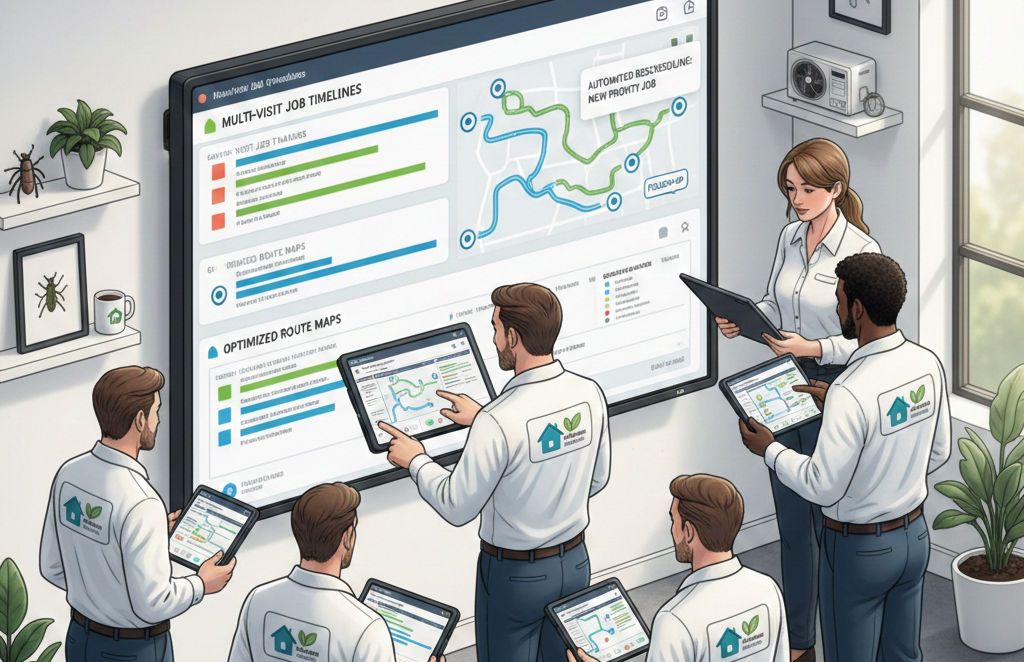
Why Multi Visit Services Are So Hard to Schedule
Multi-step jobs rarely follow a neat pattern. One visit might require a specific technician. Another might depend on equipment that was not available last week. Or a follow-up may need to be done inside a short window after the first treatment or repair.
Most teams run into three main problems:
- Drive time and routing inefficiencies
- Communication gaps between visits
- Manual rescheduling when one step shifts
These issues pile up when the business grows. More jobs mean more triggers for mistakes. Smart scheduling tools exist to shrink those pain points and automate the brainwork required to coordinate all those moving parts.
How Smart Scheduling Tools Manage Multi Visit Workflows
Smart scheduling tools help map out your recurring steps, expected timelines, and technician requirements, so you can automate key parts of the planning process. Instead of dragging jobs around by hand, the system can re-route and reassign work when things shift.
According to research by Future Market Report, service scheduling software adoption has been rising rapidly as companies seek tools that can handle task dependencies, forecasted delays, and resource balancing across an entire field team. The report highlights how modern routing systems reduce admin load while boosting on-time completion rates.
Automating the Multi Visit Timeline
Smart scheduling platforms can store the structure of your service plans so you do not rebuild them from scratch. You define the order of visits, the required skill sets, and any timing constraints between steps. The software then handles the rest. When a technician completes the first visit, the system can automatically schedule the next step based on availability and location.
Smarter Routing So Techs Spend Less Time Driving
Routing based scheduling helps reduce drive time, which is a major cost sink in any service operation. The goal is simple. Less time in the truck means more time completing visits.
For instance, using a routing tool for pest control teams lets you optimize multi-stop routes so techs can move through their day efficiently without bouncing across town. And it’s not just pest control that benefits from this approach. Any team that’s on the move regularly has much to gain from modern software.
Data Driven Planning Backed by Real Research
Some systems use predictive models to assign the right technician at the right time. In a study by this research group, analysts looked at scheduling and routing for multi visit home health services and found that optimized task planning improved efficiency and reduced operational strain. While the study focused on healthcare routes, the same principles apply to any multi visit workflow.
Benefits You Will See Across Your Operations
When service businesses switch from manual scheduling to intelligent automation, the improvements usually show up immediately. The change is especially clear for any workflow that depends on repeat visits or follow ups.
Faster Rescheduling With Fewer Mistakes
Customer changes no longer create hours of cleanup work. A good scheduling system can adjust time slots, technician assignments, and route order in real time. That helps teams avoid double booking or letting too much time lapse between required steps.
Better Customer Experience Without Extra Labor
Smart scheduling tools automatically keep customers informed. If a multi visit job requires a follow up within a specific window, the system can send reminders, confirmations, and updates. That reduces no shows, missed prep steps, and confusion. Customers feel taken care of even when your office is busy. It’s part of a modern customer service strategy.
Higher Technician Productivity and Morale
When techs get smoother routes and clearer schedules, their day feels easier. They spend less time driving and waiting. They know they are assigned to jobs that match their skill set. This reduces burnout and builds confidence, especially in multi step tasks that require consistency.
How to Build a Smarter Scheduling Setup
You do not need to overhaul your entire operation to get the benefits of multi visit automation. Most businesses start small and scale their use over time.
Map Out Your Multi Visit Services
Start by defining the typical steps in your service plans. Identify timing rules, technician requirements, and equipment or material needs. The clearer your structure, the easier the automation will be.
Set Technician Rules and Availability
Modern scheduling tools let you define technician skills, certifications, and regional boundaries. Entering accurate data upfront ensures the system always picks the right tech for the job.
Many service businesses rely on specialized scheduling platforms to simplify these rules and manage complex appointment timelines. In industries like salons, where professionals may handle multi-step services such as treatments followed by follow-up visits, tools like Time Tailor help organize staff availability, appointment dependencies, and recurring bookings in one place.
Having this structure makes it easier to coordinate schedules without constant manual adjustments. As operations grow, centralized scheduling systems help maintain consistency across staff members and service workflows.
Use Routing to Finalize Daily Plans
Once visits are assigned, routing optimization can arrange them in the most efficient order. This turns a long, manually curated schedule into a short, clean route that maximizes productivity.
How Teams Use Smart Scheduling in Real Life
Service teams have found that smart scheduling tools help with more than just planning.
Better First Contact Resolution
Multi-visit tasks often require clear initial work. With consistent scheduling and reliable follow-ups, your team increases its chances of resolving issues earlier and maintaining long-term customers.
Streamlined Cross Team Communication
Office staff and field technicians stay aligned through shared schedules and automated updates using enterprise instant messaging software.
Concluding the Multi-Visit Service Optimization Conversation
Smart scheduling tools simplify the hardest parts of multi visit service management. They reduce drive time, automate follow ups, and help your team deliver a smoother customer experience. Whether your business handles recurring treatments, multi step repairs, or long-term service plans, these tools can help you coordinate everything from technician availability to real time route updates.
If you want to keep learning about modern tools and strategies that help service teams work smarter, consider exploring more field service and operations topics in our upcoming blog posts.

Vaayu is a full-time blogger and content writer with a passion for digital marketing. With years of experience in the industry, he shares practical tips, insights, and strategies to help businesses and individuals grow online. When not writing, Vaayu enjoys exploring new marketing trends and testing the latest online tools.