
Local SEO Ranking Factors Every Business Should Know

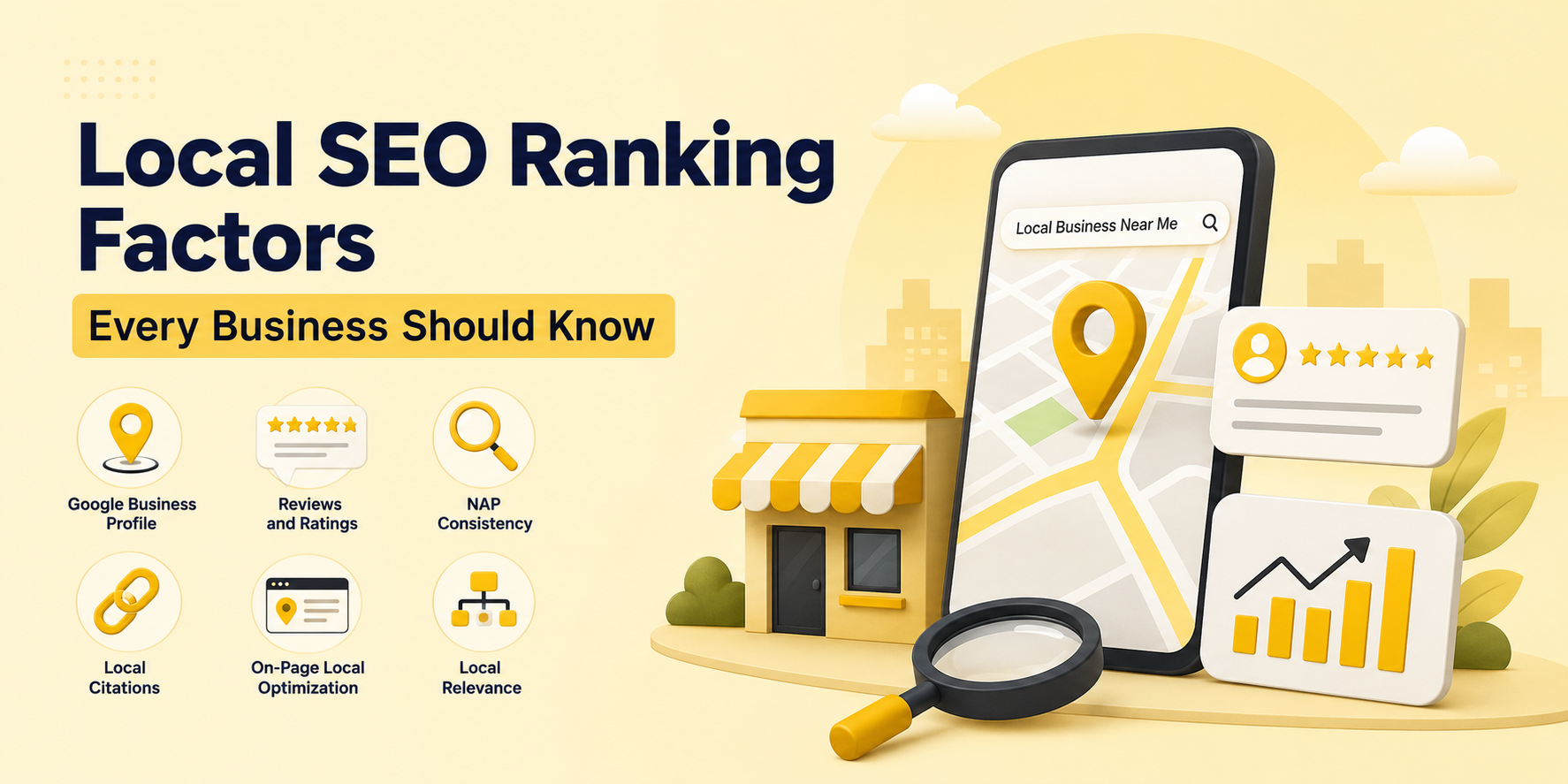
If you run a business with a physical location or a defined service area, local SEO ranking factors decide whether nearby customers find you or find your competitor instead. Google’s local results work differently than regular organic search, and honestly, a lot of business owners never learn the actual rules until traffic stalls.
Let’s break down what genuinely moves the needle in 2026, and what’s just noise.
Why Local SEO Ranking Factors Work Differently
Regular SEO chases relevance and authority across the whole web. Local SEO adds a third layer: proximity. Google’s local algorithm weighs how close a searcher is to your business alongside how relevant and trustworthy you look.
That’s why a small shop with a well-optimized Google Business Profile can outrank a bigger competitor two miles away. Distance and signal strength matter more than sheer size here.
The Core Local Ranking Factors
Google has confirmed three pillars for local pack rankings: relevance, distance, and prominence. Everything else feeds into these three.
Relevance
How well does your listing match what someone searched for? This comes down to your business categories, the keywords in your business description, and how closely your services match the search intent.
Distance
You can’t control this one directly. It’s calculated from the searcher’s location (or the location they typed) to your business address. It’s also the reason “near me” searches return different results for different people.
Prominence
This is where the real work happens. Prominence reflects your online reputation: review volume, review quality, backlinks, citations, and general web presence. It’s the factor most businesses can actually influence.
Quick summary: Local pack rankings come down to relevance, distance, and prominence. You can’t change distance, but relevance and prominence respond directly to consistent optimization work.
Google Local Search Signals That Matter Most
Beyond the big three, several specific signals shape how you show up in Google local search. Getting these right through solid local SEO services tends to move rankings faster than guessing on your own.
Google Business Profile Completeness
An incomplete profile is a missed opportunity. Fill in every field: hours, categories, attributes, services, and photos. Businesses with complete profiles get more clicks and calls than sparse ones, full stop.
Review Volume and Recency
Reviews aren’t just social proof anymore. They’re a direct ranking signal. Google favors businesses with a steady stream of recent, genuine reviews over ones with a pile of old reviews and nothing new.
NAP Consistency
Your Name, Address, and Phone number need to match exactly across your website, Google Business Profile, and every directory listing. Even small mismatches, like “St.” versus “Street,” can confuse Google’s matching algorithm.
On-Site Local Signals
Your website should reinforce your location. City and neighborhood mentions in your page titles, headers, and content help Google connect your business to the right geography.
Ranking Factors Google Weighs Beyond the Basics
Google’s ranking factors go deeper than most business owners realize. A few that get overlooked:
- Click-through rate from search results to your listing
- Mobile-friendliness of your website (most local searches happen on phones)
- Response rate and speed to customer reviews
- Structured data (schema markup) confirming your business type and location
- Backlinks from other local businesses or regional publications
Important: Response speed to reviews is an easy win most businesses skip entirely. Replying within 24 to 48 hours signals an active, trustworthy business to both customers and Google.
Common Local Ranking Mistakes
Here’s where a lot of businesses lose ground without realizing it:
- Choosing the wrong primary category on Google Business Profile
- Ignoring negative reviews instead of responding professionally
- Duplicate or outdated listings across directories
- Thin location pages with no real content, just a city name swapped in
- No mobile optimization, which tanks both rankings and conversions
To be completely fair, most of these are fixable in a single afternoon of cleanup. The bigger issue is nobody’s watching for them regularly.
And that’s the part that trips people up. A profile that looked great at launch can quietly drift out of date within a year. Categories change, hours shift for holidays, and old photos stay up long after a renovation. None of that gets flagged automatically, so it falls on someone to check.
Building a Local SEO Strategy That Actually Sticks
One-time fixes help, but local ranking factors respond best to consistency. That means regular review generation, ongoing citation cleanup, and content that keeps reinforcing your service area over time.
This is where working with a broader B2B marketing agency pays off, especially if local SEO is one piece of a bigger growth plan that includes content and paid channels working together.
Conclusion
Local SEO ranking factors aren’t a mystery, but they do require consistent attention. Relevance, distance, and prominence set the framework. Everything else, from reviews to NAP consistency to mobile speed, feeds into how strong your prominence score looks to Google.
Start with your Google Business Profile, clean up your citations, and build a steady review cadence. The businesses that stay consistent are the ones that hold their spot in the local pack.
None of this needs to happen overnight. Pick one factor, fix it properly, then move to the next. Little, steady progress beats a rushed overhaul that gets abandoned after a month.
FAQs
1. How long does it take to see local SEO results?
Most businesses notice movement in local pack rankings within 2 to 4 months, though competitive markets and larger service areas can take 6 months or more to fully stabilize.
2. Do reviews really affect local search rankings?
Yes. Review volume, recency, and your response rate all factor into your prominence score, which is one of Google’s three core local ranking factors.
3. What’s the difference between local SEO and regular SEO?
Local SEO adds proximity and location-based signals like Google Business Profile and citations, while regular SEO focuses purely on relevance and authority across the broader web.
4. How many Google reviews does a business need to rank well?
There’s no fixed number, but businesses with 20 or more recent, positive reviews generally outperform competitors with fewer or older reviews in the same local pack.

Vaayu is a full-time blogger and content writer with a passion for digital marketing. With years of experience in the industry, he shares practical tips, insights, and strategies to help businesses and individuals grow online. When not writing, Vaayu enjoys exploring new marketing trends and testing the latest online tools.